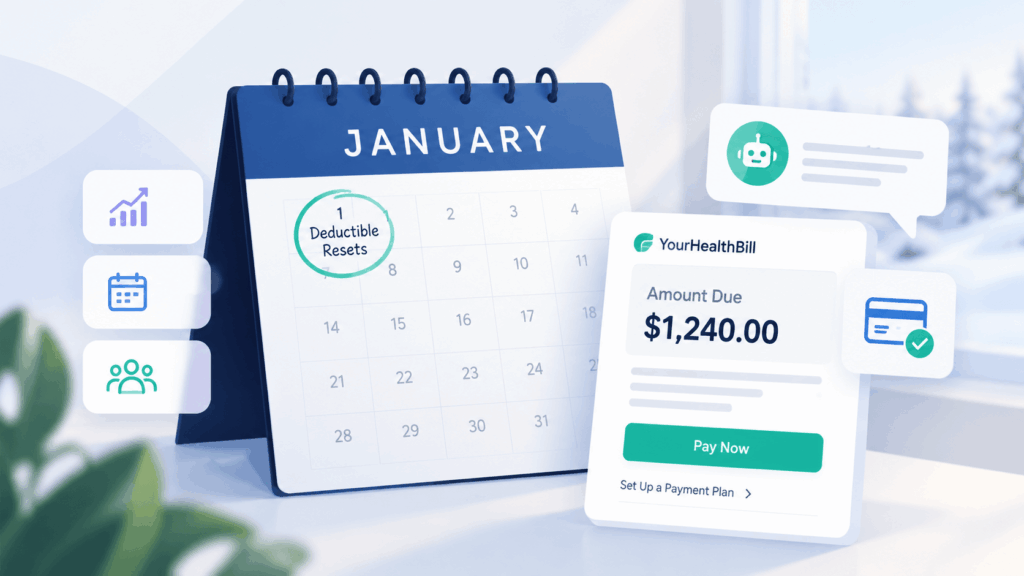
Every January, millions of patients see their health insurance deductibles reset. That means larger out-of-pocket balances, more billing questions, and greater pressure on RCM companies and healthcare practices to collect patient revenue.
And with healthcare costs continuing to rise in 2027, the challenge is only getting bigger.
RCM companies and practices that prepare early can collect more, get paid faster, and reduce the burden on their billing teams. Those that wait until balances start aging may spend months chasing payments.
Here’s a simple plan to get ahead of the January deductible reset and improve patient collections during the first 90 days of the year.
Why the January Reset Matters
According to KFF, the average annual deductible for workers with employer-sponsored single coverage who have a deductible was $1,886 in 2025. For patients who haven’t met their deductible, even routine medical visits can result in unexpectedly large bills.
For healthcare practices, this creates three challenges:
- Larger patient balances that can be more difficult to collect.
- More billing questions as patients try to understand their financial responsibility.
- More administrative work following up on payments and assisting patients.
The key to managing these challenges isn’t sending more billing reminders. It’s engaging patients earlier, making payments easier, and reducing the manual work required to collect.
November–December: Get Your Collections Process Ready
The best time to prepare for January is before the new deductibles take effect.
Start by reviewing last year’s first-quarter performance. How quickly did patients pay? How much patient AR aged beyond 90 days? How many billing calls did your team handle?
Then focus on three improvements:
- Optimize billing communications. Make sure patients receive clear, easy-to-understand bills with a direct link to pay.
- Make payment plans available through self-service. Patients with larger balances should be able to enroll in a payment plan without calling your billing office.
- Automate routine billing questions. Prepare for increased call volume by using AI-powered chat and voice agents to answer common questions about balances, payments, and statements.
These improvements can help your team handle higher patient balances without a corresponding increase in staffing.
January: Engage Patients Early and Make It Easy to Pay
The sooner patients understand their balance and receive a convenient way to pay, the better your chances of collecting before accounts begin aging. Don’t wait for a paper statement to start the collection process.
Use digital-first billing to reach patients quickly through text and email, with a direct link to an interactive bill where they can review their balance, pay immediately, or enroll in a payment plan.
But digital outreach alone isn’t enough.
Sending every patient the same generic reminders through text and email often produces disappointing results. AI-powered outreach can improve performance by personalizing when patients are contacted, which channels are used, and what messages they receive based on their behavior and payment history.
The goal is simple: Turn more patient communications into payments before balances become overdue.
February: Make Larger Balances Easier to Collect
By February, some patients will have paid, while others may be struggling with larger-than-expected balances.
Sending more of the same reminders isn’t necessarily the answer.
Instead, focus on removing barriers to payment.
- Offer payment plans proactively. Give patients with larger balances a manageable way to pay over time.
- Personalize follow-up communications. A patient who has opened their bill several times but hasn’t paid may need a payment plan offer, not another generic reminder.
- Use multiple communication channels. If patients aren’t responding to text messages, try email or another appropriate channel rather than repeating the same approach.
Personalized outreach and flexible payment options can help convert more outstanding balances into payments without increasing the workload on your billing team.
March: Prevent Patient AR From Aging Beyond 90 Days
By March, the focus should shift to patients who still haven’t paid.
Prioritize accounts approaching 90 days past due, particularly those with larger balances or previous engagement but no completed payment. Use targeted outreach to encourage payment, offer eligible payment plans, and identify accounts that need personal attention. Then compare your results with the previous year. These metrics provide a straightforward way to determine whether your collections strategy is working.
How Raxia Helps Practices Prepare
Raxia helps healthcare practices and RCM companies improve patient collections without adding more administrative work.
YourHealthBill uses AI-powered personalized outreach to engage patients through the right message, channel, and timing. Interactive digital bills, self-service payment plans, and automated payment posting make it easier for patients to pay and billing teams to collect.
Rae Chat and Rae Voice answer common patient billing questions 24/7, helping reduce routine calls and allowing staff to focus on patients who need additional assistance.
Together, these capabilities help practices collect more patient revenue, reduce billing costs, and improve the patient financial experience.
The Bottom Line
The January deductible reset is predictable. Larger patient balances, more billing questions, and increased collection challenges shouldn’t catch practices off guard.
The organizations that perform best will be those that prepare early, engage patients before balances age, and make it easier for patients to pay.
Don't wait until patient AR starts growing to improve your collection strategy.
Schedule a demo to learn how Raxia can help your organization prepare for 2027.